NOAA warns Super El Nino 2026 Could Rewrite Winter Weather
Super El Nino 2026 is gaining strength as Pacific Ocean temperatures reach record levels, raising concerns about major shifts in global weather. The World Meteorological Organization (WMO) expects the event to persist into early 2027, while US forecasters warn of changing winter rain, snowfall and temperature patterns. Here is what the latest outlook means for the US and other regions.
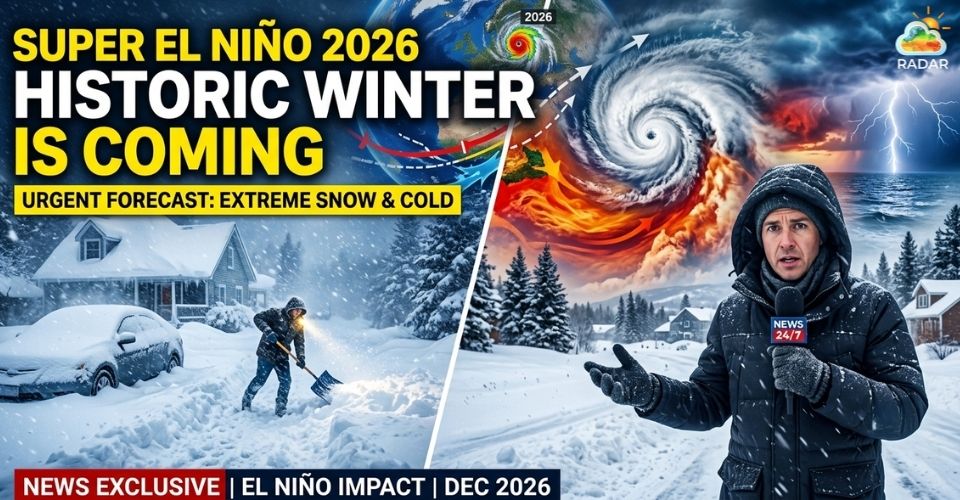
Super El Nino 2026 could reshape US winter
Super El Nino 2026 Strengthens as Ocean Temperatures Rise
Super El Nino 2026 is approaching a potentially historic peak, with several ocean temperature measurements already reaching record territory.
According to the World Meteorological Organization, sea surface temperatures in the central and eastern tropical Pacific could reach 3.7°C above average between October and December, exceeding the previous peak recorded during the 2015–2016 event.
NOAA’s October 8 outlook also indicates that a strong to very strong El Nino is likely to continue through early 2027.
The event is expected to peak around December, although its final intensity remains uncertain.
El Nino is a natural climate pattern that occurs when surface waters in the tropical Pacific become warmer than usual.
This warming changes atmospheric circulation, affecting rainfall, temperatures and storm activity across the world.
The current event is developing against a background of human-driven global warming.
While scientists have not established that climate change makes El Nino events stronger or more frequent, rising global temperatures can amplify the heat associated with an El Nino year.
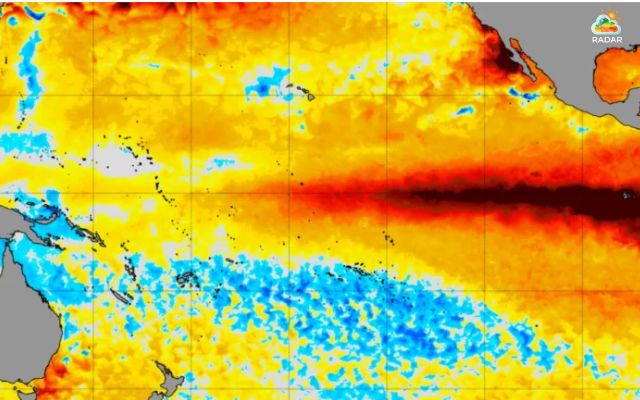
Sea surface temperature anomalies from NOAA Coral Reef Watch on October 7, 2026 (Photo: NOAA)
How Super El Nino 2026 Could Impact US Winter Weather
The upcoming winter could bring contrasting weather conditions across the United States, with some regions facing increased rainfall while others experience warmer-than-average temperatures.
- Wetter conditions in parts of the South and West
El Nino often shifts the Pacific jet stream, increasing the likelihood of stormy weather across parts of the southern US.
California and the Southwest could face periods of heavy rain, raising concerns about flash floods, landslides and coastal impacts.
Check rainfall forecasts and radar indicators for California on Radar Map to track approaching storms and changing precipitation patterns.
- Different snowfall patterns
Parts of the southern US may see greater opportunities for winter precipitation, while warmer conditions could limit snowfall in some northern areas.
However, snowfall depends on local temperatures and storm tracks, so El Nino alone cannot determine how much snow a location will receive.
- Warmer conditions in some northern states
Areas across the northern US may experience above-average winter temperatures, while parts of the South could see cooler, wetter periods.
These are broad seasonal tendencies rather than precise forecasts for individual cities.
Residents should monitor local forecasts as winter approaches, especially when severe weather or flooding is possible.
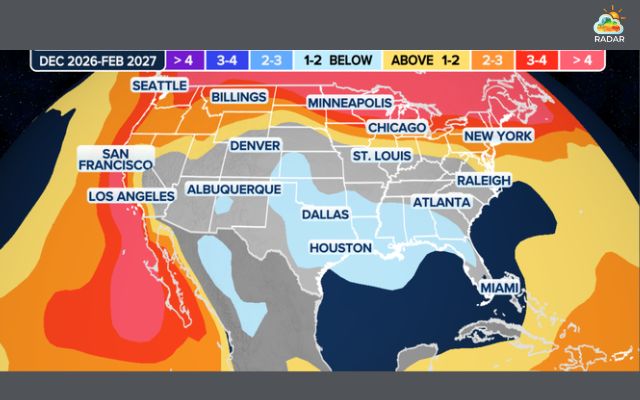
Winter temperature forecast map across the US (Photo: FOX Weather)
Check out Temperature radar map on GoWeatherRadar
Global Impacts of Super El Nino 2026 and What Comes Next
Beyond the US, Super El Nino could intensify existing weather risks in several parts of the world.
Previous strong events have been associated with drought in parts of Southeast Asia and southern Africa, while sections of East Africa and South America have experienced unusually heavy rainfall and flooding.
The event is also expected to contribute to higher global temperatures. El Nino transfers additional heat from the ocean into the atmosphere, potentially adding to the warming caused by greenhouse gas emissions.
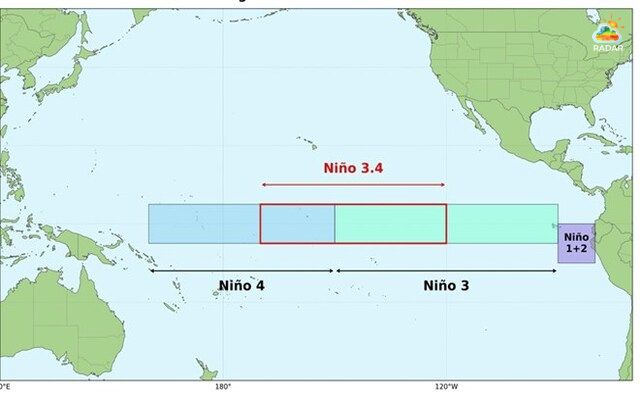
El Nino caused strong heat in Southeast Asia in July (Photo: Severe Weather Europe)
This could help keep global temperatures unusually high into 2027.
Tropical cyclone activity may also shift.
Strong El Nino events tend to suppress Atlantic hurricane activity while favoring storms in parts of the Pacific, although other ocean and atmospheric conditions also influence individual storms.
The WMO expects El Nino to continue into early 2027, but its effects will vary by region.
Scientists will keep tracking ocean temperatures and updating seasonal forecasts as new observations become available.
Communities should follow official weather alerts and prepare for local risks rather than assume every region will experience the same impacts.
References
-
FOX Weather
-
BBC


0 Comments
Leave a Comment
Your email address will not be published. Required fields are marked *