State of Emergency in Florida as Severe Flooding Hits 7 Counties
A state of emergency in Florida now covers seven counties as persistent heavy rain causes widespread flooding. Roads are underwater, schools have closed, and emergency crews are responding to affected communities. With more rainfall possible, officials are urging residents to stay alert and follow local weather updates.
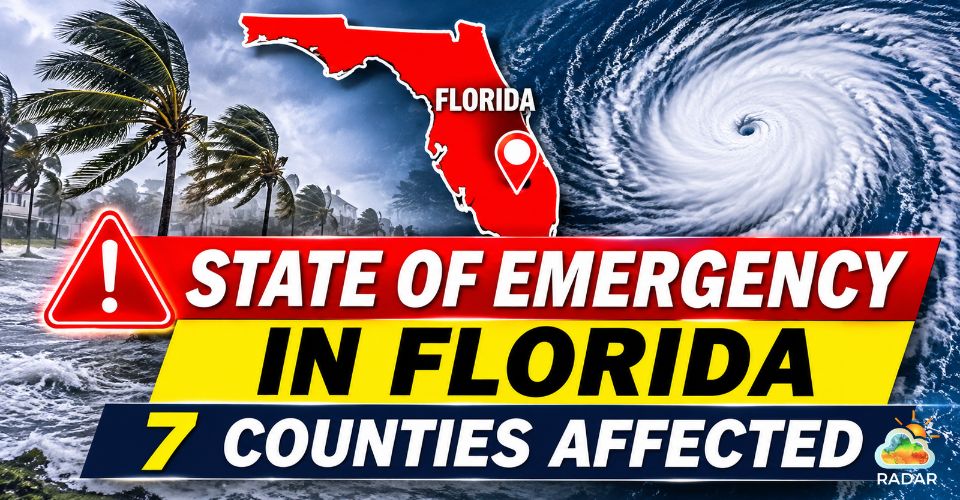
State of emergency in Florida covers seven counties
State of Emergency in Florida Covers 7 Counties
Florida Governor Ron DeSantis signed Executive Order 26-227 on November 2, 2026, declaring a state of emergency in seven counties after days of heavy rain disrupted communities and threatened critical infrastructure.
The declaration includes Brevard, DeSoto, Hardee, Highlands, Indian River, Martin and St. Lucie counties.
A slow-moving low-pressure system brought widespread rainfall to the Florida Peninsula between October 31 and November 2, triggering flash flood warnings and dangerous road conditions.
The order allows the Florida Division of Emergency Management to coordinate rescue, evacuation, and recovery efforts.
It also authorizes the activation of the Florida National Guard and Florida State Guard, along with emergency funding and assistance from federal and other state agencies.
The declaration took effect immediately and remains active for 60 days unless extended.
|
FLOOD WARNING - Take Action A Flood Warning is issued by the National Weather Service (NWS) when flooding is imminent or already occurring. Floodwaters can threaten lives, damage property and make roads dangerous. What should you do?
Source: National Weather Service – Flood Safety. |
Extreme Rainfall Causes Widespread Flooding Across Florida
Brevard County has been among the hardest-hit areas, with parts of its southeastern region receiving an estimated 15–20 inches of rain.
Some locations south of Palm Bay recorded particularly intense rainfall within a 12-hour period, contributing to rapid water accumulation across nearby communities.
These totals approached Florida's single-day rainfall record of 23.28 inches, set in Key West in 1980.
Rainfall exceeding 15.5 inches in 12 hours also meets the statistical threshold for a 1-in-1,000-year rainfall event, illustrating the exceptional intensity of the downpours.
The heavy rain has left streets, residential neighborhoods and other low-lying areas underwater.
Floodwaters have stranded vehicles, disrupted daily travel and forced local authorities to close roads where conditions became unsafe.
Some residents have also needed emergency assistance as water levels rose around their homes.
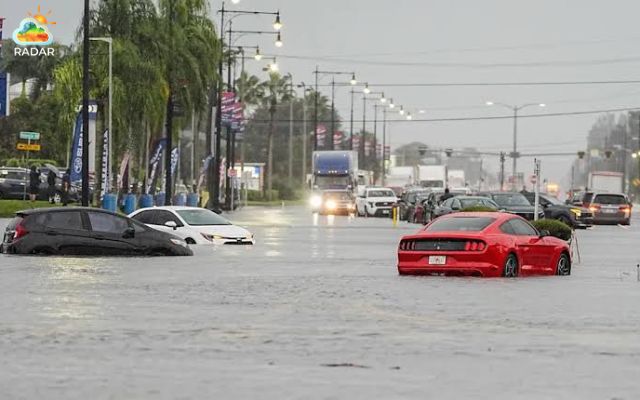
Heavy rain caused severe flooding in West Melbourne, FL (Photo: Craig Bailey)
Florida Fish and Wildlife Conservation Commission officers rescued more than 60 people in Brevard County, including residents trapped by rising floodwaters in Melbourne and Palm Bay.
The rescues highlight the danger posed by rapidly rising water, particularly when residents are unable to leave flooded areas safely.
The flooding has also disrupted local education.
Brevard Public Schools canceled classes as officials assessed damage and evaluated safety conditions for students and staff.
In DeSoto County, flooding affected roads around Arcadia, creating hazardous travel conditions.
School closures were also announced as local authorities responded to rising water levels and potential transportation risks.
Check precipitation intensity, rainfall patterns, and storm movement through the radar layers on Radar Maps to follow changing conditions.
Although the heaviest rainfall may ease in some areas, the flood threat is not necessarily over.
Additional thunderstorms could bring more rain to Florida, increasing runoff in places where the ground is already saturated.
Some locations were forecast to receive several more inches of rain, according to weather reports on November 2.
Further rainfall could slow drainage, worsen existing flooding and create new problems for communities already dealing with damaged roads and disrupted services.
Residents should continue monitoring National Weather Service alerts, follow instructions from local authorities, avoid unnecessary travel and stay away from flooded roads.
References
-
FOX Weather
-
WFLA
-
ABC News
-
Gulf Coast News
-
AOL




0 Comments
Leave a Comment
Your email address will not be published. Required fields are marked *