Dangerous Heat Wave in Southern California Drives October Temps to Historic Highs
A relentless late-season heat wave in Southern California is pushing October temperatures above 100 degrees. Over 37 million people face extreme temperature warnings as inland areas spike into triple digits. High pressure and a strong El Niño are driving temperatures 15 to 20 degrees above normal. Authorities urge residents to stay hydrated and limit sun exposure as wildfire risks remain elevated across the region.
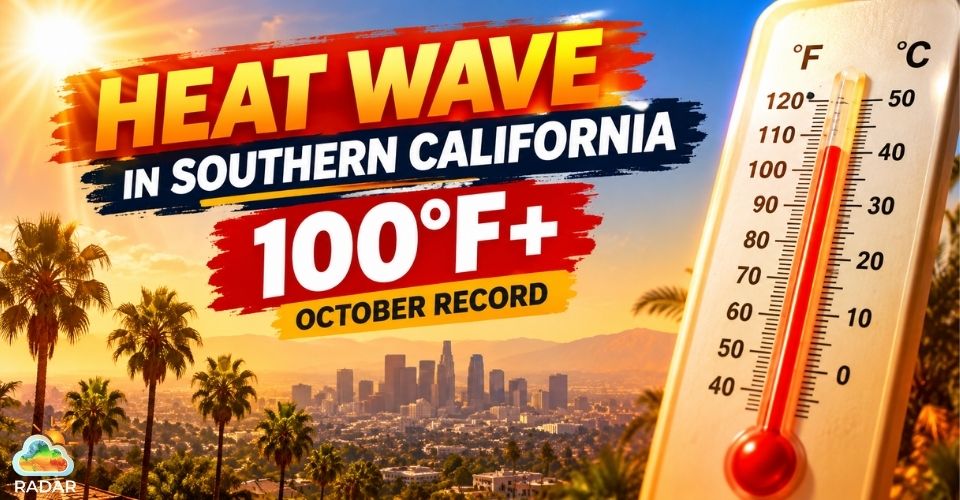
A relentless heat wave in Southern California smothers the region this October
Record Heat Wave in Southern California Sweeps Region
Southern California launched into October with record-shattering temperatures that usually belong in mid-summer.
The National Weather Service (NWS) confirmed that a massive ridge of high pressure, combined with ocean warming from El Niño, has trapped an intense heat dome over the region.
As a result, daily temperatures have spiked 15°F to 20°F above seasonal averages across the Southland.
In Downtown Los Angeles, temperatures surged toward 100°F, while inland communities like Woodland Hills and Palm Springs experienced blistering triple-digit peaks.
Academic experts from UCLA noted that these extreme temperatures exceed historical averages by nearly 30°F.
Climate scientists emphasize that while autumn heat spikes happen, climate change is making these late-season episodes noticeably longer, more frequent, and far more dangerous for urban centers.
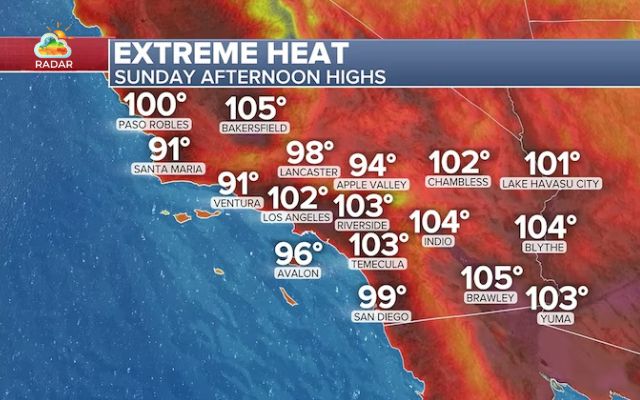
Temperature is forecast to be over 100 degrees across Southern California on Oct 4, 2026 (Photo: ABC News)
Check live weather radar and high-resolution precipitation layers for Los Angeles on RadarMap to stay informed on localized weather shifts.
Bouquet Fire Ignites Amid Rising Fire Danger
The prolonged heat has rapidly depleted soil moisture, turning dry brush across Southern California into highly flammable fuel.
Dangerous conditions escalated near Santa Clarita in Northern Los Angeles County, where the fast-moving Bouquet Fire ignited in the Angeles National Forest.
Explosive fire behavior pushed the blaze past 1,000 acres within 24 hours, threatening nearby structures and vital power infrastructure.
Emergency officials issued mandatory evacuation orders (zones LAC-E018 and LAC-E030-B) for residents along Bouquet Canyon Road and established an evacuation shelter at the Castaic Sports Complex.
Ground crews and air tankers continue battling flare-ups under 105°F heat.
Heavy smoke plumes continue to pollute air quality across the Santa Clarita Valley, posing severe risks to children and outdoor workers.
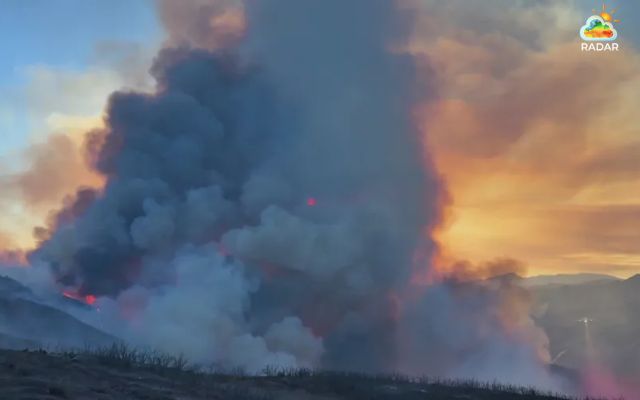
Thick smoke billows from the Bouquet Fire near Santa Clarita (Source: KTLA 5)
Heat Warnings Issued for Outdoor Events and Public Health
Beyond the immediate fire danger, the persistent heat is placing a heavy strain on daily community life and public health systems.
The extreme weather coincided with major weekend crowds, including high school athletic events and the National League Division Series in Los Angeles.
To prevent heat-related illnesses, organizers were forced to implement emergency cooling centers, misting stations, and mandatory hydration breaks for athletes and attendees.
Public health officials strongly advise all residents to alter their daily routines until the heatwave breaks.
Vulnerable populations, particularly outdoor laborers, children, and elderly residents face heightened risks of heat exhaustion and heat stroke.
Health authorities recommend staying indoors during peak afternoon hours, utilizing air-conditioned public spaces, and keeping a close check on vulnerable neighbors as Southern California waits for cooler autumn air to return.
|
🌡️ Quick Heat Safety Tips
|
References
-
ABC News
-
Spectrum News
-
The Guardian
-
KTLA




0 Comments
Leave a Comment
Your email address will not be published. Required fields are marked *