Discover Best Wind Speed for Sailing and How To Check It on GoWeatherRadar
Finding the best wind speed for sailing depends on more than just the number of knots. Your experience, boat type, wind gusts, and sea conditions all matter. For many recreational sailors, 8–15 knots can provide a comfortable balance of control and performance. This guide explains ideal wind ranges for different sailors and boats, plus how to check live wind conditions with GoWeatherRadar. Diving in!
Best wind speed for sailing
Best Wind Speed for Sailing by Experience Level
The ideal wind speed changes with your sailing experience. Beginners usually need lighter, more predictable conditions, while experienced sailors can handle stronger winds.
-
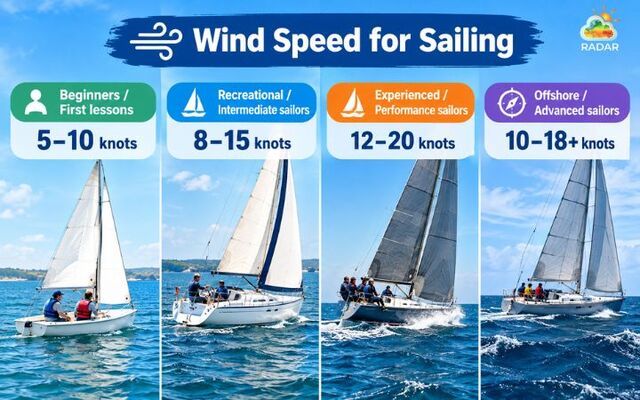
Beginners / First lessons: 5–10 knots — A gentle range for learning basic steering, tacking, and sail handling. Winds around 10 knots or less are generally easier for new sailors to manage.
-
Recreational / Intermediate sailors: 8–15 knots — A good balance of control and performance. The boat should feel responsive without creating excessive physical demands.
-
Experienced / Performance sailors: 12–20 knots — Stronger winds can provide faster and more exciting sailing. Sailors need better sail trim, boat control, and awareness of gusts.
-
Offshore / Advanced sailors: 10–18+ knots — More experienced crews can manage stronger conditions, but the ideal range depends heavily on the boat, route, forecast, and sea state.
Remember: These are general comfort ranges, not fixed safety limits. A sudden gust can make conditions much more challenging than the average wind speed suggests.
Best wind speed for sailing based on experience level
Best Wind Speed for Sailing by Boat Type
Boat design also affects how much wind is comfortable. A small dinghy can react quickly to a gust, while a larger keelboat may remain more stable in the same conditions.
-
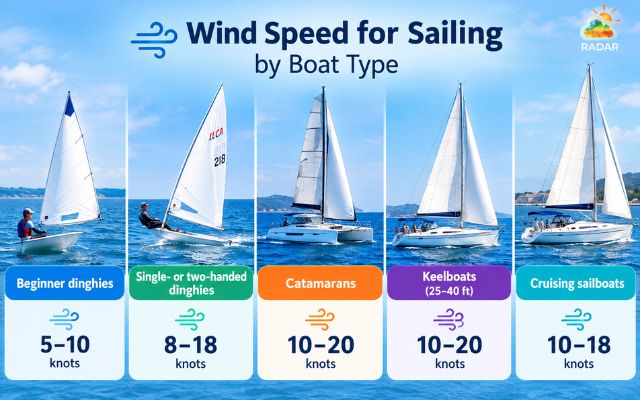
Beginner dinghies: 5–10 knots — Light winds make these boats easier for new sailors to control. Conditions around 12+ knots can become more demanding for beginners.
-
Single- or two-handed dinghies: 8–18 knots — These boats can provide more active sailing in moderate winds, but stronger gusts require precise steering and sail control.
-
Catamarans: 10–20 knots — Catamarans can perform well in moderate to stronger winds. The ideal range varies by boat design, sail area, and crew experience.
-
Keelboats (25–40 ft): 10–20 knots — These boats can remain comfortable in moderate winds, although reefing may become necessary as wind speed and gusts increase.
-
Cruising sailboats: 10–18 knots — This can provide comfortable cruising conditions for many boats, but offshore conditions, waves, and the boat's sail plan should also be considered.
The same wind speed can feel very different on different boats. Always check gusts, wind direction, sea state, and your boat's recommended operating conditions before sailing.
Ideal wind speed for sailing by boat type
Quick Reference Table
The table below provides a simple starting point for comparing common sailing conditions. These are general comfort ranges, not universal safety limits.
|
Skill Level / Boat Type |
Ideal Wind Speed (Knots) |
Caution / Stay Home Limit |
|
Beginners & Lessons |
5 – 10 knots |
Stay ashore if >12 knots |
|
Recreational & Cruisers |
8 – 15 knots |
Reef sails at 18+ knots |
|
Performance & Racing |
15 – 20 knots |
High technical strain |
|
Beginner Dinghies |
6 – 10 knots |
Avoid >12 knots |
|
Catamarans |
12 – 22 knots |
Stay home at 28+ knots |
|
Keelboats (25–40 ft) |
10 – 20 knots |
Reef at 18–20 knots |
⚠️ Important note:
💨 Gusts: 10 knots average can still include much stronger gusts.
🌊 Sea state: 10 knots on calm water feels very different from 10 knots with large swells.
🧭 Wind direction: Headwinds, crosswinds, and offshore winds can change sailing conditions.
⛵ Boat & experience: The right wind range depends on your boat and skill level.
These changing conditions also matter for other activities on the water, such as fishing. Learn more about using a weather radar for fishing to monitor precipitation and approaching storms.
Tip: Use wind speed as a starting point, not a fixed safety limit. Always check the full marine forecast before sailing
Get the Most Accurate Live Wind Speed on GoWeatherRadar
Once you know your ideal sailing range, the next step is to check the actual conditions at your sailing location.
GoWeatherRadar lets you view live wind speed, gusts, wind direction, and upcoming changes on one interactive map.
Step 1: Open GoWeatherRadar and find your location
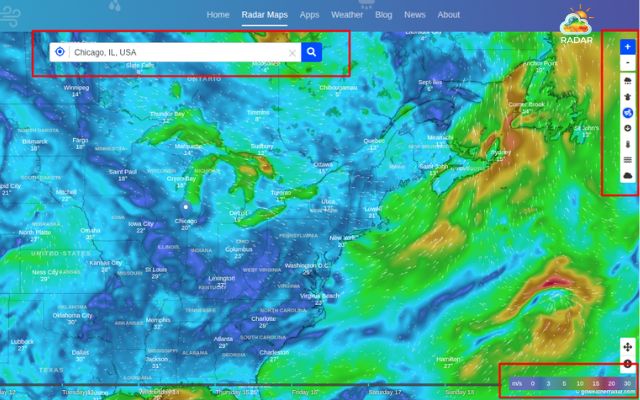
Go to GoWeatherRadar and open Radar Maps. Search for your city, marina, coastal area, or ZIP code using the search bar.
You can also use the location button to center the map on your current position.
Step 2: Select the Wind layer
Open the weather layer controls and choose Wind.
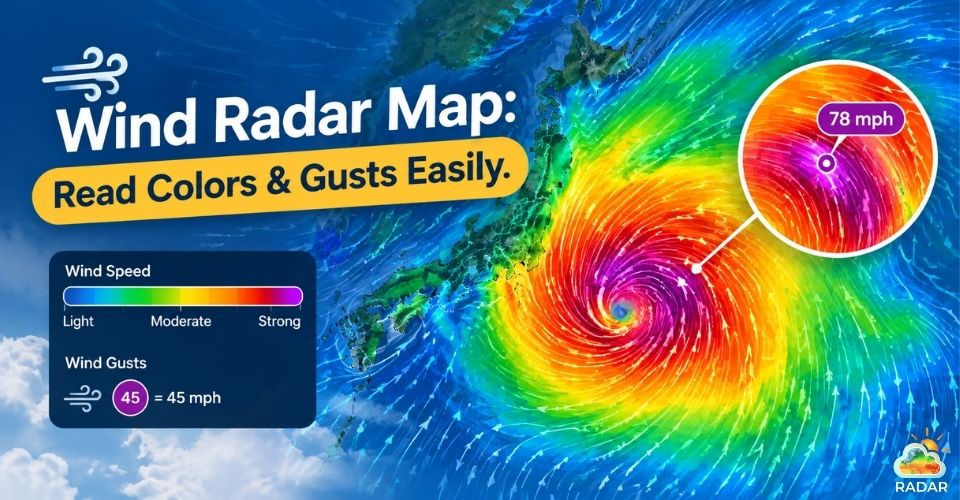
The map will display wind conditions using animated airflow lines and color-coded areas, helping you see both wind speed and direction at a glance.
Step 3: Switch the unit to knots
For sailing, knots (kt) are usually the most useful unit.
Adjust the map settings to display wind speed in knots so you can compare the current conditions directly with the sailing ranges above.
GoWeatherRadar also supports mph and km/h.
Step 4: Check wind speed and gusts
Don't look at average wind speed alone. Compare the sustained wind with wind gusts to see whether short bursts could make conditions more difficult.
For example, a steady 10-knot wind can feel very different when stronger gusts occur.
Step 5: Check wind direction and movement
Follow the animated lines on the map to understand where the wind is coming from and how it is moving.
This is particularly useful for sailing because wind direction can affect your route, tacking, and how exposed you are to changing conditions.
Learn more: Weather radar application
Step 6: Check the forecast before leaving
Use the timeline at the bottom of the map to move beyond current conditions and check how wind speeds may change.
GoWeatherRadar provides forecast information using ECMWF model data, helping you identify periods when winds may strengthen or ease during your sailing trip.
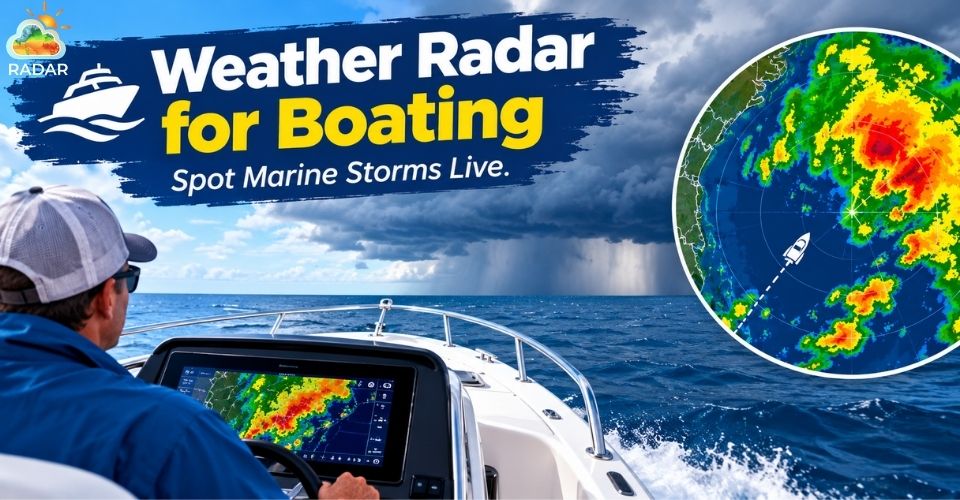
For a broader view of changing conditions on the water, see our weather radar for boating guide to learn how radar can help you monitor rain, storms, and other weather risks.
Easily track wind speed on GoWeatherRadar
Sailing tip: Don't choose your sailing time based on wind speed alone. Check wind speed + gusts + direction + forecast together before heading out.
Final Words
In short, there is no single perfect or best wind speed for sailing. For many recreational sailors, 8–15 knots can provide a comfortable balance, but always consider gusts, wind direction, sea state, and your boat's capabilities before heading out. For a safe sailing trip, do not forget to check weather conditions, espically wind speed on GoWeatherRadar!



0 Comments
Leave a Comment
Your email address will not be published. Required fields are marked *